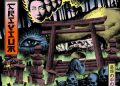

Much like the mythical Hydra—the multi-headed beast that only Heracles was able to subdue—the current incarnation of Crimson Glory needs a vital reminder: you cannot simply lop off heads and replace them with whoever is geographically convenient or a ‘buddy’. It is equally disastrous to grant decision-making power to someone who views the band’s core identity as ‘dated’. This management style has already cost the group at least three vocalists (GC, Mystique, and ML), a guitarist, and an entire album’s worth of high-quality, polished material—material that will likely surface under a different name and is far more aligned with the band’s true lore and sound than this current effort will ever be. The fact that you’ve come up with a collection of “nice ideas” does not automatically result in memorable songs. In art, choices bear consequences.
The chemistry behind the band’s first two classic albums was undeniable—a superhuman distillation of heavy metal’s best elements, steeped in mystery and poise. They famously bridged the gap between British titans like Iron Maiden and Judas Priest and the sophisticated, poetic melodies of American progressive masters like Savatage and Queensrÿche.
With only three members of the classic lineup remaining, expectations were high for their hand-picked replacements. Unfortunately, the results are mixed. Mark Borgmeyer (replacing main composer Jon Drenning) is a competent but unremarkable player; his tone lacks Drenning’s exotic “shimmer”, and his riffs fail to stick. On vocals, Travis Wills faces the impossible task of filling Midnight’s shoes. While Wills is a talented singer who handles the softer passages especially well, he lacks the dynamic range and “insane” upper register that defined the band’s identity. He feels like a safe, logistical choice rather than the stylistic firebrand the material demands, and it’s also sad that he can’t be himself in the material either but rather has to live up to an almost impossible expectation.
One of the most evident and immediate issues that comes up, however, is the production. The mix is uncharacteristically “modern”—sounding more like Nevermore than classic Crimson Glory and even so uneven between tracks that it might have been done in up to three or more different sessions. It is oppressively bass-heavy, pushing the guitars to the periphery. A more balanced rhythm section would have gone a long way in recapturing the band’s signature atmosphere, but that is not the case here.
Opener “Redden the Sun” has a strong foundation but gets lost in “rhythmical bombast”. The bridge veers too close to “Eternal World”, and the solo feels unnecessarily flashy. Like Icarus, it flies toward greatness only to face a hard landing.
“Chasing the Hydra” feels a lot more logical in sequence than on its own but is immediately marred down by regurgitating the opening riff of “Red Sharks”. While the idea is decent, the lyrics lack the poetic delivery of the band’s masterworks; Wills’ performance here feels more like a weak King Diamond impersonation than a tribute to Midnight.
“Broken Together” feels like a valiant attempt, but it ends up as Crimson by the numbers. Between the evident self-plagiarism (again) and the forced vocal delivery, the song loses its way during a wandering solo and never recovers its essence or focus.
“Angel in My Nightmare” manages to be the most intriguing track up to this point. It utilizes the band’s trademark “soft-to-electric” build-up without relying on nostalgia-bait riffs, though the arrangement feels slightly overloaded after some point, obscuring the song’s more melodic essence.
“Indelible Ashes” is a riff-heavy track that wouldn’t feel out of place on “Astronomica”. However, compared to earlier demos featuring a different vocalist, Wills’ performance feels subdued, opting for safe harmonies where the song cries out for a high-octane “Halford-meets-Wade” delivery that the demo actually caters for.
“Beyond the Unknown” is a bit of a standout in a desert of mediocrity. It is simpler, “jumpier”, and far more effective for it. It feels like a polished “Transcendence” demo where the bass finally sits back in the mix. Still, it would have been cut from the final product.
“Armor Against Fate” is marred by the vocal choices and arrangement. Wills struggles with the falsetto transitions, preventing some genuinely good individual ideas from shining.
“Pearls of Dust” features a promising opening but then fails to deliver a great hook or a purposeful conclusion.
Lastly, “Treiskaideka”: (Greek for “Thirteen”). Originally titled “Thirteen”, this was intended to be a centerpiece of the album that was known as “Lifeforce”. This final version is a shadow of its original demo. The melodies and lyrics have been simplified, stripping away the complexity that would have made this a “Transcendence”-level anthem (that the Mystique/CG demo is).
Overall, “Chasing the Hydra” leaves a lingering sense of underachievement. It feels like a collection of hasty ideas and loose arrangements that rarely land. Combined with a muddy mix—perhaps the weakest to ever come out of Morrisound Studios—the album undermines the band’s potential. This is a lost opportunity to recapture a global audience. Unless Crimson Glory makes some difficult creative and personnel choices, they may find that even the “nostalgia circuit” and hardcore fandom have their limits.