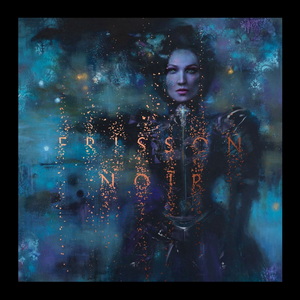
Tarja Turunen’s tenth studio album, “Frisson Noir”, marks her triumphant return from a self-imposed, seven-year exile from heavy rock. Widely praised by critics as one of the most immersive and complex records of her solo career, it delivers both a welcome return to her signature symphonic metal edge and a stellar line-up of high-profile guest musicians who make vital contributions to their respective tracks.
Following a brief and rather eerie introduction, the album bursts open with the eponymous title track. “Frisson Noir” is a heavy, symphonic powerhouse that unleashes a tempest of emotive vocals over a bleak, driving rock foundation. The grand orchestral elements elevate the song into something massive and epic, making a staggering first impression and finding Tarja in absolute peak form.
“The Eternal Return” is a theatrical and grandiose piece featuring captivating vocal arrangements and a deeply haunting main melody. However, it suffers slightly from an over-cluttered mix; the heavy guitars occasionally clash with and antagonize the other instruments, making the track feel unnecessarily busy for no apparent reason.
“Leap of Faith” features Tarja’s former Nightwish bandmate Marko Hietala. This song is a melancholic, emotionally charged heavy semi-ballad. The duo possesses an undeniable, timeless chemistry that worked brilliantly in the past and translates just as powerfully into the present day.
“At Sea” is an overtly ambitious, ten-minute cinematic and progressive metal epic. Driven by an incredibly strong chorus, the track more than just saves face—it stands out as one of the finest songs of her entire solo career and beyond. Even the intricate, multi-layered instrumental midsection feels strangely appropriate and well-executed.
“Blaze Forever” relies heavily on driving, muscular guitar riffs, yet it remains alluring due to its subtle, intricate underlying instrumentation. Tarja anchors the heavy wall of sound with a remarkably melodic and powerful vocal delivery.
“The Trace Outlives” attempts to capture the magic of the title track but turns the dial up to eleven by layering on even more loud, distorted guitars. While it throws in nearly everything but the kitchen sink, the track somehow works. Despite a mix that feels more than a little cluttered, Tarja’s beautiful vocal melodies hold the chaos together.
“Tango” is pretty true to its name, highly accessible and instantly likeable. It seamlessly blends traditional elements of the classic dance style with the album’s broader metal aesthetic, serving as a creative celebration of the genre.
“Anemoia” marks a sonic departure from the rest of the record, as it strips things back by pairing classical guitars with delicate piano and elegant strings. It is a pleasant foray into more melancholic territory, though—pardon the pun—it does feel a bit “anaemic” when contrasted against the heavy instrumentation found elsewhere on the album.
“I Don’t Care” is a highly theatrical, extreme gothic-metal crossover featuring Cradle of Filth frontman Dani Filth. Delivering a more subdued version of his signature piercing shrieks, his style blends surprisingly well with Tarja’s operatic delivery. Despite being an unlikely pairing on paper, this duet serves as a delightfully dark minor highlight of the record.
“Against the Odds” is a rather cinematic piece that feels somewhat uneven and slightly long-winded. However, it still possesses distinct charms, particularly during the soothing vocal passages which redeem its pacing issues.
The album concludes with a brief outro, though it essentially amounts to a faint chime fading into feedback—making it largely forgettable.
While the dense production on certain tracks may prove to be a point of contention for the more discerning fans, the mix ultimately serves the raw, dark, and bleak aesthetics of the album well.
Overall, “Frisson Noir” stands as one of the most focused and superior releases by the iconic former Nightwish diva. Tarja has fully matured into an artist with a distinct, fiercely independent identity, capable of crafting individual works that command respect entirely on their own merits, rather than relying on the nostalgia of her past legacy.