
Hey Richard, it’s a pleasure to have you on the Grande Rock website. First of all tell us how did you come up with the idea to form the Oblivion Protocol project?
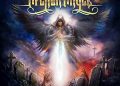
R: Thanks, it’s good to be here. To be honest, the whole Oblivion Protocol project happened by accident. I just made the album for my own enjoyment and I wasn’t expecting anyone to hear it. But one day I was chatting to a friend at a record label and he asked what I was working on. When I told him, he asked me to send a copy to the label, and the next thing I knew I was being offered a record deal. So, that was when Oblivion Protocol was born.
“The Fall of the Shires” was written as a sequel to “The Legends of the Shires” from Threshold, right? When did you get the idea for the sequel and when did you start working on it?
R: When I was out touring Europe with Threshold in 2018 to promote our ‘Legends of the Shires”’ album, I wrote an idea for a sequel to the “Legends” story. For a while it looked like Threshold was going to make the sequel, but then they changed their minds and we went on to make the album “Dividing Lines” instead. So, I found myself with an unused storyline and a couple of leftover songs, and that was when I decided to complete the project on my own.
Many fans wonder why you didn’t release the sequel “The Fall of the Shires” with Threshold?
R: That was the original plan, but halfway through the writing stage one or two of the guys thought it felt a bit constraining, so we dropped the idea. You can only go forward with something if you’ve got everyone’s support, that’s part of being in a group together. So, I withdrew a couple of songs that only worked as part of the story, the opening and closing tracks “The Fall (Part 1)” and “The Fall (Part 2)”, and those became the starting point of my Oblivion Protocol album.
Which are the music similarities and differences between “The Fall of the Shires” and “The Legends of the Shires”?
R: Obviously, it’s a sequel to “Legends of the Shires”, so I wanted it to have a close connection to the Threshold sound, but because my voice is less heavy than that of Threshold vocalist Glynn Morgan, it gave me an opportunity to explore the softer side of progressive rock a bit more. So, while most of the songs could have sat comfortably on a Threshold album, I’ve been told that some of them move more towards Pink Floyd or Porcupine Tree territory in some places. But that’s one of the things I love about progressive music, you can explore both the heavy and light side of the spectrum and create your own unique sound canvas. “The Fall of the Shires” is quite a dark story, so the overall sound of the album has a dark atmosphere that flows through the record and defines the Oblivion Protocol sound.
What is the story of “The Fall of the Shires” about?
R: The original “Legends” story had a double meaning, it was partly about a nation trying to find its place in the world, and partly about a person growing up and working out what to do with their life. At the end of the story, the person is shown a number of possible futures, one of which is to become the king. So “The Fall of the Shires” tells the story of him becoming the king of the Shire. He’s not ready for such a monumental task so he doesn’t do a very good job, so it turns out to be quite a dark story.
Have you changed your recording or writing method as a result of the pandemic?
R: Not really, I mostly work alone anyway, writing is a long process that starts in the head, develops slowly until the song feels ready to start recording, and then that gets developed more and more until it’s finally where I want it to be. It’s not really a process that can be done with somebody else in the room. Recording is different of course, but quite often musicians record their parts remotely now, but that’s more about convenience and technology rather than the pandemic.
Can you tell us about any challenges you faced while recording this album? Did you try any new techniques or approaches?
R: Yes, I became a frontman, that was definitely a new approach for me! Up until that point I’d only sung backing vocals or demos, so that was a big change for me. The whole album was recorded remotely, I sent everyone the demos and they recorded their own parts and sent them back to me. The guys all know what they’re doing, so they made it very easy for me!
How did you put together the following lineup: Ruud Jolie (Within Temptation) on guitars, Simon Andersson (Darkwater) on drums, and Darby Todd (Devin Townsend) on drums?
R: They’re all good friends of mine so it felt very natural. When I got offered a record deal, I realized I would need to put a band together, because at the point everything on the album was just played or programmed by me. So, I drew up a wish list of who I would most like to work with, and thankfully they all said yes! I knew Darby a long time before he started drumming for Devin Townsend, in fact he almost auditioned for Threshold back in the 1990s. He lives just around the corner from me and we bump into each other all the time, so it was a great opportunity to finally record together. I first met Ruud when he supported Threshold back in the 1990s, and later the roles were reversed when he became Within Temptation’s guitarist and we supported them. And I met Simon about ten years ago when we were in a band together called AudioPlastik, he’s such a phenomenal musician so it was great to have the opportunity to work with him again. So, collectively we became Oblivion Protocol.
How did you decide to take on lead vocals on the album? Was this your initial choice, or did you have someone else in mind?
R: Initially I just recorded the album for myself as a private project. The longer you’re a musician the more you end up with unreleased recordings and ideas in your vault, so I thought Oblivion Protocol was going to be one of those. I even thought I might press one copy on vinyl LP just to complete the project, so I made sure the album was the right length to fit onto a vinyl record. At that point I was playing, programming and singing everything on the album, so I never really thought about somebody else singing it. So, obviously it was a bit of a shock when I was offered a record deal and realized I’d unintentionally become a frontman!
How did you get Karl Groom to contribute to the album?
R: The opening and closing tracks “The Fall (Part 1)” and “The Fall (Part 2)” were originally written for Threshold, so I thought it made sense to ask Karl to guest on those and he’s done an amazing job.
Please give us a hint about each track…
R: At the end of the “Legends” story the protagonist sees several potential futures – “maybe a writer, a king, a star, a fighter”, so in the sequel “The Fall of the Shires” he unwisely becomes the king, and the shire becomes a much darker place as a result. At the start of the story in “The Fall (Part 1)”, he’s faced with the problem of how to control the population, so he asks his advisers for solutions and decides to implement all of them. “Tormented”, “Vertigo” and “The Fall (Part 2)” go on to tell the story of how this affects the king, while the other tracks “Public Safety Broadcast”, “This is Not a Test”, “Storm Warning” and “Forests in the Fallout” tell the story of how it affects the population.
The production is amazing. It’s clear and dynamic without being overly modern. If I’m not mistaken, you did the recording, mixing, and mastering. Are you fully satisfied with the final outcome?
R: Thank you, it was a real labour of love and I’m more than happy with the outcome. Making music is my passion and it’s such a pleasure to be able to produce something like this.
How did the collaboration with Atomic Fire Records come about? Are you pleased with your cooperation so far?
R: Yes, Atomic Fire Records is a great label, it was formed by Markus Staiger who originally formed Nuclear Blast. Many of the staff are former Nuclear Blast colleagues, so I knew most of them through Threshold. One day I was chatting online to Markus about one of his other bands called Suasion. He asked what I was working on, so I told him about my secret project and that was how the whole thing started.
What are your expectations for “The Fall of the Shires”?
R: I hope we’ll still be going in 20 years; it’s been really enjoyable working with Ruud, Simon and Darby so I’d love to continue. Now that the album’s out I hope we’ll look at doing some live shows, probably a couple of festivals first and then we’ll see what’s possible.
Is Oblivion Protocol a one-off or do you plan to release more albums in the near future?
R: I have two more sequels planned to complete the “Shires” story, so I hope we’ll get the opportunity to do those. I’m busy writing the next album at the moment. It’s possible we’ll release the occasional single in between albums as well, we’ll just have to see how that goes.
How would you describe the music style of your band to someone who has never heard of you?
R: I would say it’s atmospheric, heavy, progressive and conceptual, somewhere between progressive metal and progressive rock.
It’s time for our “Strange Questions”!!! How did you come up with the name Oblivion Protocol initially?
R: To be honest, I thought of the name because it was originally just a private project that I had no intention of pursuing further. If the project had a mission statement it was to go absolutely nowhere and to be heard by no one, so I thought the name Oblivion Protocol would emphasize the point perfectly.
Are “social media” a “compulsory part” of music biz these days or bands, artists & labels can do without them as well? Is social media a way to appear successful even if that is not the case?
R: Social media is such a great way to connect directly with our fans; it’s not perfect but it’s a fantastic tool. Before the internet we relied on word of mouth and posting fan club magazines, so it was impossible to reach everyone, and social media definitely made things better. I’m not aware of any bands using social media to pretend to be successful though.
What do you think about the “downloading & streaming issue” of our time? Do you prefer the streaming services more or not?
R: If you stream an album on YouTube it generates about $0.02, but if you buy a CD it generates $15, so obviously artists would prefer you to buy the physical version. Streaming services provide a great way to check out new music, but not many artists can make a living from streaming royalties alone.
What are those things that you do not like in the music industry nowadays?
R: To be honest I love the music industry! I know you hear stories about bad deals, bad managers or bad labels, but I’m fortunate to work with good people who love the music and look after the artists who make it.
Fill in the phrase… “Prog Metal wouldn’t have evolved the way it did, if it hadn’t been for…”
R: … classic progressive rock and heavy metal bands from the 70s and 80s.
Which are the Top 3 Prog Metal or Prog Rock albums of all time according to you?
R: I don’t really follow other progressive metal bands too closely, obviously I’m aware of them but I mostly listen to older music. My favourite classic albums would be Pink Floyd “Wish You Were Here”, Genesis “And Then There Were Three” and Queen “A Night at the Opera”, but I couldn’t give you a top 3 prog metal albums.
Which is the most underrated musician/band of all time?
R: I would choose Simon Andersson, bassist for Oblivion Protocol.
Put together the best prog rock/metal line-up of all time. Who plays what?
R: Ha ha, I already got to do that when I formed Oblivion Protocol, it’s my dream line-up! (I’d probably change that singer though)!
Which is that band that you’d like to be part of (any time & era)?
R: Queen, no contest!
Which do you consider to be the best male & female vocalist in rock/metal history?
R: Our former Threshold vocalist Andrew ‘Mac’ McDermott was a phenomenal talent; he had that perfect rock voice. And for female vocals, of course I can only choose my wife Farrah!
If the debut album’s music was a famous painting, which one would it be, and why do you see a connection between the artwork and your sound?
R: Probably something by Mark Rothko, he created some beautiful textures and that’s something I try to do with sound.
If you had the chance to travel in time… where would you choose to go? To the past or the future and why?
R: I’d go back to the 70s to watch all my favourite classic bands performing live, I was too young the first time round.
What are your thoughts on A.I.? It appears to have taken over the world in every part of our life over the last few months, and this is just the beginning. What are your thoughts on the AI-created music?
R: I’ve heard some A.I. generated vocals but they don’t sound very convincing yet, you can hear which singers they’re trying to emulate but there’s no emotion or energy in the results. I’m sure they’ll get better over time, but I would prefer to hear a human performance every time!
That’s all for now Richard; thank you for talking with Grande Rock. Say anything you feel like saying before we close. Take care!
R: Thanks Thanos, it’s been a pleasure!